
Download the pdf:
- INTRODUCTION: REPLACING ONE RELIGION WITH ANOTHER
- CHAPTER 1: MAKING SCIENCE INTO A RELIGION
- CHAPTER 2: SCIENCE AS CAPITALIST PROPAGANDA
- CHAPTER 3: THE SYSTEMATIC CORRUPTION OF RESEARCH
- CHAPTER 4: EVOLUTION AS SCIENTIFIC DOGMA
- CHAPTER 5: WHEN “SETTLED SCIENCE” CRUMBLES – A PATTERN OF FALSE CERTAINTIES
- CHAPTER 6: THE SYSTEMATIC NATURE OF THE PROBLEM
- CHAPTER 7- THE MYTH OF “SELF-CORRECTING SCIENCE”
- The Defense That Proves Our Point
- “Self-Correction” That Takes Decades While People Die
- The Correction Comes From Outside, Not Within
- No Accountability = No Learning = Repeated Errors
- “Self-Correction” Is Used to Silence Critics, Not Welcome Them
- The “Correction” Often Doesn’t Correct the Underlying Problem
- Science Under Capitalism Cannot Truly Self-Correct
- The Islamic Alternative: Built-In Accountability
- Conclusion: “Self-Correction” Is An Excuse, Not A Feature
- CONCLUSION: THE IDOL WILL FALL
- Author
INTRODUCTION: REPLACING ONE RELIGION WITH ANOTHER
In medieval Europe, the Catholic Church controlled all knowledge and truth. If you questioned the Church, you faced punishment or death. The Church claimed they spoke for God, and their words could not be questioned. Common people were told to trust the priests, not think for themselves. A small group of powerful elites controlled what counted as “truth,” and they used this power to stay rich and in control.
Today, we think we live in a smarter age. People believe they’ve escaped from religious control and superstition. They think faith has been replaced with reason, and priests have been replaced with scientists. We’re told that science is objective, based on observation, and fixes its own mistakes. Science is supposedly the only reliable path to truth. To question science is to be stupid, backwards, dangerous and heretic in the modern world.
But have we truly escaped control through dogma? Or have we simply replaced one priesthood with another? Has science, or more precisely, the institution of science under capitalism, become the new idol, a golden calf that humanity worships without question? And is this idol serving truth and human welfare, or has it been twisted into a tool for corporate profit and control?
This article will prove that modern institutional science has become exactly what it claimed to oppose: a system of rigid beliefs that crushes dissent, serves power rather than truth, and manipulates people for money and political gain. We will examine how science has been weaponized by capitalism to create fake needs, justify exploitation, and maintain a materialistic worldview that serves corporate interests. We will explore the systematic lies and frauds that fill scientific institutions, from pharmaceuticals to nutrition, from cosmetics to psychology. And we will show that this corruption is not accidental but built into the system, requiring not reform but revolution, a complete dismantling of the capitalist-scientific complex and its replacement with a system focused on truth and human welfare, a system like the Islamic Caliphate.
The evidence we present is not conspiracy theory but documented facts. The idol of science is crumbling, and when it falls, it will take with it the entire structure of materialist ideology that has enslaved humanity for generations.
CHAPTER 1: MAKING SCIENCE INTO A RELIGION
From Tool to Idol
Science began as a method, a systematic way of understanding the natural world through observation, experiments, and logical thinking. The scientific method, when properly used, is a powerful tool for discovering physical truths. No one disputes the value of genuine scientific inquiry.
The problem starts when science transitions from method to worldview, from tool to ideology, from servant to master. This transformation, mostly complete by the mid-twentieth century, changed science from a humble pursuit of knowledge into an arrogant claim to possess the only valid form of knowledge. In this transformation, science became scientism, the quasi-religious belief that science alone can answer all meaningful questions, that anything not accessible to scientific investigation is either meaningless or doesn’t exist, and that scientists are a new priesthood whose statements must be accepted on faith.
This scientism works exactly like the Christian dogmatism it claims to have replaced. Just as medieval peasants were told to trust the Church’s interpretation of Scripture rather than read it themselves, modern citizens are told to “trust the science” rather than examine evidence critically. Just as Church authorities declared certain questions off-limits, scientific authorities today declare certain ideas unthinkable, certain questions unaskable. Doubt the official story on evolution, climate, vaccines, or any other sacred topic, and you are branded a denier, a heretic, anti-science. The parallel to Christian excommunication is exact. The difference is just in words: where the Church threatens hell, scientism threatens social rejection, career destruction, and the label of ignorance.
This christian treatment of science serves a crucial function in modern capitalist society. By positioning science as the ultimate judge of truth, and scientists as its priests, the system creates an authority that cannot be challenged. This authority can be used to legitimize whatever policies, products, or ideologies serve corporate and state interests.
When a pharmaceutical company wants to sell a drug, they cite “the science.” When food corporations want to deflect blame for obesity, they fund “scientific studies.” When governments want to implement unpopular policies, they invoke “scientific consensus.” The label “scientific” has become a trump card, ending debate rather than opening it. This is not how science is supposed to work, but it is exactly how christianity worked in its heyday, as a tool of social control pretending to reveal the truth.
The tragedy is that many scientists themselves genuinely believe in the scientific method and truly pursue truth. But they work within institutions corrupted by corporate money, ideological gatekeeping, and career pressures. The individual scientist may be honest, but the system is rotten. And because science has been elevated to idol status, criticizing the system is treated as attacking science itself. This trick protects the corrupt institution by hiding behind the legitimate method. To question a pharmaceutical company’s study is portrayed as “anti-science,” when in fact it is the essence of scientific skepticism. To point out that research funding creates conflicts of interest is labeled “conspiracy theory,” when in fact it is basic sociology.
The idol must be protected at all costs, because once people realize it is just an idol, made by human hands, serving human interests, the spell breaks and the system loses its authority.
The Language of Absolute Authority
Notice the language used to defend scientific authority: “The science is settled.” “Scientific consensus is clear.” “Trust the experts.” This is the language of christian authority, not scientific inquiry. Real science is never “settled“, it is always temporary, always open to change based on new evidence. Real scientists do not demand trust, they present evidence and invite examination. Real scientific consensus is a temporary agreement based on current data, not a permanent dogma enforced by institutional power.
Yet the phrase “trust the science” has become a mantra, repeated endlessly in media, education, and public discourse. It reveals the fundamentally religious nature of modern scientism: it demands faith, not understanding; submission, not engagement; trust, not verification.
This demand for trust is particularly harmful because it reverses the relationship between citizen and knowledge. In a healthy environment, institutions earn trust by showing reliability, transparency, and accountability. But today, trust is demanded from the start, as a moral obligation. To question is to sin. To doubt is to reveal your ignorance or bad intentions. The very act of asking “How do you know?” or “Can I see the data?” or “Who funded this study?” is treated as evidence of bad faith. This is textbook authoritarianism, dressed in the white coat of scientific respectability.
Furthermore, this language hides the messy reality of how science actually works. Scientific research is conducted by human beings with biases, ambitions, and financial pressures. It is funded by institutions with agendas. It is published in journals owned by for-profit corporations. It is filtered through peer review systems prone to groupthink and ideological enforcement. To acknowledge these realities is not to “attack science“, it is to recognize that science, like all human activities, is embedded in social structures that shape its outputs. But the idol-worshipers cannot acknowledge this, because it would undermine the mystique of scientific perfection upon which their authority depends.
The result is a bizarre situation where the very people who claim to champion reason and evidence demand the abandonment of critical thinking when it comes to their own statements. We are told to be skeptical of anecdotes, traditional knowledge, and personal experience, but to accept without question the findings of studies funded by billion-dollar corporations and published in journals with clear commercial interests. We are told that questioning scientific authority is the height of ignorance, while blindly accepting it is the height of wisdom. This is not enlightenment, it is indoctrination. And like all indoctrination, it serves those in power.
CHAPTER 2: SCIENCE AS CAPITALIST PROPAGANDA
Creating Fake Needs: The Science of Consumption
Science became an idol, and capitalism is its temple. The marriage between scientific institutions and corporate interests is not accidental but fundamental to how modern science operates. Under capitalism, research is not primarily about discovering truth but about generating profit. Universities depend on corporate funding. Researchers depend on grants from industries. Journals depend on pharmaceutical advertising. This economic reality shapes what research gets done, what findings get published, and what conclusions get promoted.
Consider the beauty and cosmetics industry, worth over five hundred billion dollars annually. This entire industry rests on manufactured insecurity, convincing people, especially women, that their natural appearance is inadequate and requires constant chemical intervention. How is this insecurity created and maintained? Through science. Cosmetics companies employ teams of scientists to conduct studies showing that their products work, that skin aging is a medical problem requiring treatment, that certain body shapes or facial features are objectively more attractive. These studies are then published in journals, cited in advertisements, and repeated by the media as established facts. The message is clear: science has proven you need these products.
But dig into the research and the facade crumbles. Studies are designed to show minimal benefits under ideal conditions. Sample sizes are small, control groups poorly chosen, variables cherry-picked. “Clinically proven” often means nothing more than that some measurable change occurred, however trivial or temporary.
“Dermatologist recommended” simply means the company paid dermatologists to endorse it. “Laboratory tested” is meaningless, everything is laboratory tested. Yet these scientific-sounding claims create an aura of legitimacy that sells billions of dollars worth of products, most of which provide little to no actual benefit beyond placebo effects.
The same pattern repeats across industries. Food companies fund nutrition research showing their products are healthy. Fitness corporations fund studies validating their equipment. Supplement manufacturers fund research demonstrating their pills’ effectiveness. In each case, science serves not truth but profit.
The research is designed to reach predetermined conclusions that support marketing stories. But because we have been taught to worship science as objective truth, we accept these corporate-sponsored conclusions as legitimate findings rather than recognizing them for what they are: propaganda designed to extract money from our wallets.
Planned Obsolescence and Endless Consumption
Capitalism requires constant growth, which requires constant consumption. People must keep buying, endlessly, or the system collapses. But how do you convince people to keep buying things they do not need? One method is planned obsolescence, designing products to break or become outdated quickly. But a more harmful method is to use science to create the perception of constant inadequacy, where yesterday’s purchase is never quite good enough and must be replaced with today’s improved version.
The smartphone industry shows this perfectly. Each year, companies release new models with tiny improvements, accompanied by elaborate scientific presentations showing superior processing power, camera quality, and battery life. These specifications are presented as objective technical facts, implying that the new model is scientifically proven to be better. And technically, it is slightly better, but the improvements are so small as to be unnoticeable to users. Yet the scientific framing creates a sense that failing to upgrade means settling for inferior, outdated technology. This is capitalist manipulation pretending to be scientific progress.
The pattern extends far beyond smartphones. Cars must be replaced every few years because new models have scientifically advanced safety features. Clothing must be replaced because last season’s styles are scientifically proven to be less flattering. Home appliances must be upgraded because energy efficiency studies show new models save pennies on electricity bills.
In each case, science provides the justification for throwing away perfectly functional items and purchasing new ones. The result is a culture of constant consumption, where people work harder to afford more products they don’t need, chasing a scientifically-validated ideal of the good life that moves endlessly away like a mirage.
What makes this particularly harmful is that genuine scientific progress gets mixed with marketing pseudoscience, making it difficult for ordinary people to tell the difference between real improvements and manufactured needs. Yes, some new technologies genuinely improve lives. But the vast majority of new products represent tiny tweaks to existing technologies, marketed as revolutionary breakthroughs. The scientific language hides this reality, creating the false impression that constant upgrading is a rational response to objective progress rather than a conditioned behavior serving corporate profits.
The Materialist Worldview: Science’s Greatest Product
But capitalism’s use of science goes far deeper than selling specific products. The ultimate product science sells under capitalism is materialism itself, the worldview that physical matter is all that exists, that humans are merely biological machines, that consciousness is an illusion, that meaning and purpose are subjective fantasies, and that the pursuit of material pleasure is the only rational goal. This worldview is not a neutral description of reality but a specific belief system that serves capitalist interests perfectly.
Why? Because materialist philosophy justifies and normalizes capitalist behavior. If humans are just sophisticated animals driven by selfish genes, then greed is natural and inevitable. If consciousness is merely brain chemistry, then manipulating people’s desires through advertising and propaganda is no different than any other form of chemical engineering. If there is no higher meaning or purpose, then the pursuit of wealth and pleasure becomes the only rational life goal. If there is no afterlife or divine judgment, then exploiting others carries no ultimate consequences. Materialism, in short, provides the perfect philosophical foundation for a system based on endless accumulation, ruthless competition, and the reduction of all values to market prices.
Science did not have to lead to materialism, many of history’s greatest scientists were deeply religious and saw their work as uncovering Allah’s design. But under capitalism, scientific institutions actively promoted materialist interpretations while pushing out scientists who maintained religious or spiritual perspectives. This was not because materialism is more scientifically valid; consciousness, meaning, and purpose cannot be measured in laboratories, but that does not prove they do not exist, but because materialism served the system’s ideological needs. A population that believes humans are meat robots with no higher purpose is far easier to control through material incentives than a population that believes in higher values and divine accountability.
The result is a strange contradiction: science, which claims to be free of ideology, has become the primary vehicle for spreading a specific ideology; materialism, that conveniently serves the economic system funding scientific research. This ideology is presented not as one philosophical perspective among many, but as the inevitable conclusion of rational inquiry. Anyone who questions it is not engaging in philosophical debate but denying reality itself. This is how ideology becomes invisible: by declaring itself to be simply “the truth” rather than one interpretation among many.
CHAPTER 3: THE SYSTEMATIC CORRUPTION OF RESEARCH
When Fraud Becomes Standard Practice
The corruption of science under capitalism is not limited to subtle biases in research direction or interpretation. In many cases, it crosses into outright fraud, the deliberate falsification of data, manipulation of results, and hiding of inconvenient findings. What is most disturbing is not that fraud occurs, humans have always been capable of dishonesty, but that it has become systematic, institutionalized, and largely unpunished. The pharmaceutical industry provides the clearest examples.
Consider the case of Vioxx. Merck, one of the world’s largest pharmaceutical companies, knew from their own internal research that Vioxx significantly increased the risk of heart attacks and strokes. They knew this for years before the drug was withdrawn from the market. During those years, they actively hid the evidence. They published selective studies showing only benefits. They wrote research papers. They buried negative findings. They continued marketing the drug aggressively.
The result: tens of thousands of deaths, hundreds of thousands of serious injuries. When finally exposed, Merck paid fines, billions of dollars, but still less than their Vioxx profits, and no executive went to prison. This is not an exception but the business model.
The same pattern repeats throughout the pharmaceutical industry. Studies funded by drug companies are four times more likely to show favorable results than independent studies. Negative trials are quietly buried in filing cabinets, never reaching publication. Side effects are downplayed or blamed on other causes. Conflicts of interest fill every level; researchers on company payroll, journal editors with financial ties to industry, regulatory agencies staffed by former industry executives.
The FDA, supposedly protecting public health, approves drugs based on industry-funded trials, rarely conducts independent verification, and operates on “user fees” paid by the companies it supposedly regulates. This is regulatory capture in its purest form, the regulator serving the regulated rather than the public.
And yet, when these frauds are exposed, the response is remarkably weak. A few fines are given, some studies are pulled, perhaps a product is withdrawn. But the system continues unchanged.
Why? Because the fraud is not a bug but a feature. When profit is the primary motive, and penalties for fraud are merely financial, companies rationally calculate that the benefits of dishonesty outweigh the costs. Executives face no personal liability, corporate structures shield them from prosecution. Shareholders profit from the fraud and have no incentive to demand change. The system actively rewards dishonesty while punishing whistleblowers and critics.
The Replication Crisis: Most Published Research Is False
Even setting aside deliberate fraud, the quality of published research has gotten so bad that most findings cannot be replicated. This replication crisis, acknowledged even by mainstream scientists, reveals that the peer-review system has utterly failed to maintain scientific standards. Study after study, when independently repeated, fails to produce the same results. In psychology, only thirty-six percent of landmark studies could be replicated. In cancer research, only eleven percent. In economics, only sixty-one percent. These are fields where billions of dollars in research funding have produced a literature that is largely unreliable.
Why does this happen? Multiple factors contribute. Researchers face tremendous pressure to publish novel findings to advance their careers, “publish or perish” is not a joke but the reality of academic life. Novel findings get published; replications do not. So researchers are pushed to find something new rather than verify something old. This creates a bias toward exciting results over true results. Furthermore, statistical manipulation allows researchers to torture data until it confesses to whatever they want.
P-hacking, HARKing, selective reporting, and outright data fabrication are far more common than the public realizes. Reviewers, who are unpaid volunteers with their own research to conduct, rarely have time to verify the claims they are supposedly reviewing. They cannot access raw data, cannot repeat experiments, and often lack the expertise to catch sophisticated manipulation. Peer review, the supposedly rigorous gatekeeper of scientific quality, is in reality a quick check for obvious errors and little more.
The consequences are severe. Medical treatments are based on studies that cannot be replicated. Public policies are justified by research that does not hold up under examination. Billions of dollars and countless person-hours are wasted chasing findings that turn out to be statistical errors or outright fabrications. Trust in science erodes as people notice that scientific recommendations change constantly, often reversing completely. Yesterday’s healthy food is today’s poison. Last decade’s essential supplement is this decade’s useless pill. The expert consensus of one generation is the discredited superstition of the next. This undermines not just trust in corrupt institutions but in the scientific method itself, which is a genuine tragedy because the method remains valid even as the institutions betraying it do not.
Follow the Money: Who Funds Determines What’s Found
If you want to understand why scientific research so consistently serves corporate interests, follow the money. Research requires funding, and funding comes primarily from corporations and governments serving corporate interests. This is not conspiracy but basic economics. If a pharmaceutical company funds a study on their drug, that study is overwhelmingly likely to find the drug effective. If an oil company funds climate research, that research is likely to downplay fossil fuel contributions to warming. If a food company funds nutrition research, their products will be cleared. This is not because researchers are all corrupt (though some certainly are), but because funding shapes research at every level.
It shapes which questions get asked. If no one funds research into whether a cheap generic drug works as well as an expensive new one, that research does not happen. It shapes study design. Industry-funded studies use methods subtly biased toward favorable results. It shapes publication. Companies can suppress unfavorable findings by simply not submitting them for publication. It shapes interpretation. Unclear results can be spun either way, and the sponsor’s interests determine which way. It shapes careers. Researchers who consistently produce industry-friendly findings get more funding, better positions, and professional advancement. Those who produce inconvenient findings struggle to publish, lose funding, and are quietly pushed out of the field.
The result is a research literature systematically biased toward whatever serves the interests of those funding the research. And because most research is funded by profit-seeking corporations, the literature is systematically biased toward corporate interests. This bias is not random noise that cancels out over time but a directional force consistently pushing science toward conclusions that justify more consumption, more medication, more intervention, more profit. The “scientific consensus” that emerges from this corrupted process is not an unbiased assessment of evidence but a corporate-friendly narrative enforced by institutional power.
And yet, when critics point this out, they are accused of “anti-science” attitudes. The trick is to mix up criticism of corrupted institutions with rejection of the scientific method itself. This confusion protects the corrupt system by positioning any challenge as an attack on science itself. It is a brilliant propaganda move: capture the institutions of science, corrupt them for profit, then use the prestige of “science” to shield those institutions from criticism. Anyone who questions the corruption can be dismissed as an ignorant science-denier, while the real science-deniers, those who violate scientific principles for profit, hide behind the label of “scientist.”
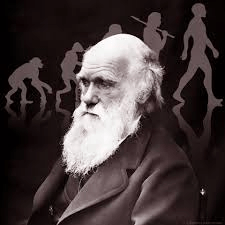
CHAPTER 4: EVOLUTION AS SCIENTIFIC DOGMA
The Untouchable Theory
Among all scientific theories, evolution holds a unique status. It is presented not as a theory in the scientific sense (a testable explanation subject to revision) but as an unquestionable fact, the very foundation of modern biology. To question evolution is to mark yourself as uneducated, religiously extreme, anti-intellectual. It is the one scientific position that cannot be challenged without facing professional destruction. This alone should raise suspicion. In genuine science, everything is questionable. The most established theories should be the most rigorously tested, the most open to challenge. But evolution occupies a protected position where challenge is not welcomed but punished.
Why this special protection? Because evolution serves a crucial ideological function within the materialist worldview that supports capitalism. If humans are merely the product of random mutation and blind selection, then there is no inherent human dignity, no higher purpose, no moral law except what we create, no accountability beyond the material consequences of our actions. This philosophical conclusion, whether or not it logically follows from the biological theory, has been promoted relentlessly by evolution’s supporters. Evolution is not just a theory about biodiversity; it is the keystone of a materialist philosophy that justifies the capitalist treatment of humans as resources to be exploited.
This is why the evidence for evolution is never honestly examined in mainstream institutions. Students are not taught to critically evaluate the theory but to accept it as fact. Textbooks present evolution as settled science, mentioning only the evidence that supports it while ignoring or minimizing problems. When fraudulent evidence is exposed, and there has been plenty, it is quietly removed from textbooks with no explanation to students that they were taught lies. The fossil record’s lack of transitional forms is explained away rather than acknowledged as a serious challenge. The mathematical improbability of complex specified information arising by chance is dismissed rather than calculated honestly. The irreducible complexity of biological systems is denied rather than addressed scientifically.
The Dogma Is Cracking: What We Once “Knew” Is Now Wrong
The protective wall around evolution is cracking, and cracks are appearing precisely because the evidence does not support the grand claims made for the theory. Consider what we were absolutely certain about just decades ago, now quietly abandoned or completely changed. The certainty has not been replaced by humility but by new certainties, equally rigid, equally protected from examination.
We were absolutely certain that “junk DNA” proved evolution, most of the human genome was supposedly functionless evolutionary debris, leftover from our evolutionary past. This “fact” was triumphantly cited as proof of unguided evolution, because an intelligent designer would not fill organisms with useless genetic junk. Then the ENCODE project discovered that most “junk DNA” has function after all. The triumphant proof of evolution quietly disappeared from textbooks, replaced with vague statements about regulatory regions. No apology was issued to the critics who had been mocked for suggesting junk DNA might have purpose. The goalposts simply moved.
We were absolutely certain about the tree of life, that all organisms could be arranged in a branching tree showing their evolutionary relationships. Textbooks showed these trees as established facts. Then genome sequencing revealed massive conflicts between different gene trees. Horizontal gene transfer, once considered rare, turned out to be common, completely scrambling the neat tree pattern. Instead of admitting that the tree of life might not be a good model after all, evolutionary biologists invented the “web of life” or “forest of life,” maintaining that evolution was still proven while quietly abandoning their previous certainty about how it worked.
We were absolutely certain about vestigial organs, structures like the appendix, tonsils, and tailbone that supposedly proved our evolutionary ancestry because they served no current function. These “useless remnants” were taught as solid proof of evolution. Then medicine discovered that these organs do have functions. The appendix is part of the immune system. Tonsils fight infection. The coccyx anchors important muscles. One by one, the “vestigial” organs turned out to be functional after all. Again, no apology, no acknowledgment that students had been mistaught. The examples simply vanished from textbooks, replaced by new examples that will presumably also be quietly abandoned when their function is discovered.
We were absolutely certain about embryonic recapitulation, that embryos replay their evolutionary history, with human embryos going through fish and reptile stages. Ernst Haeckel’s embryo drawings illustrated this perfectly and were reproduced in textbooks for over a century. Then it was discovered that Haeckel had fraudulently altered his drawings to make embryos look more similar than they actually are. This has been known since the 1970s, yet Haeckel’s drawings or derivatives continued appearing in textbooks into the 2000s. Even after removal, students were not told they had been taught using fake evidence. The story continued uninterrupted.
The Pattern Repeats: Certainty Collapses, Dogma Remains
What these examples reveal is a disturbing pattern. Evolutionary biologists present their current understanding as a certain fact, mock critics who question it, teach it to students as settled science, and use it to argue that evolution is proven beyond doubt. Then, when research undermines that understanding, they quietly abandon it and replace it with a new certainty, equally rigid, equally proclaimed as unquestionable. The specifics change but the dogmatism remains constant. This is the opposite of how science should work. Real science embraces uncertainty, acknowledges when it is wrong, and treats theories as temporary explanations subject to revision.
The persistence of dogmatism despite repeated failures suggests that evolution’s protected status has little to do with evidence and everything to do with ideology. Evolution must be true because the alternative, that life was designed, would have implications that the materialist establishment cannot accept. If life was designed, there is a Designer. If there is a Designer, materialism is false. If materialism is false, the philosophical foundation of secular humanism collapses. And if secular humanism collapses, so does the ideological justification for a society organized around material gain rather than spiritual development. The stakes are not scientific but philosophical and political. This is why evolution cannot be questioned, not because the evidence is so strong, but because the implications of doubt are so threatening.
CHAPTER 5: WHEN “SETTLED SCIENCE” CRUMBLES – A PATTERN OF FALSE CERTAINTIES
Beyond Evolution: A Century of Scientific Pride
The pattern we observed with evolution (absolute certainty followed by quiet abandonment) extends far beyond evolutionary biology. Across every scientific field, we find the same disturbing cycle: theories proclaimed as unquestionable fact, taught to generations of students, used to mock skeptics, then silently thrown away when evidence becomes impossible to ignore. The public rarely hears about these collapses because admitting them would undermine the story of scientific perfection that protects the institution’s authority. But the pattern is undeniable, and it reveals that the problem is not with individual theories but with the arrogant certainty that characterizes modern scientism.
Let us examine specific examples from various fields. Examples where the scientific establishment was not merely wrong but absolutely certain they were right, where dissent was punished, where skeptics were ridiculed, and where the “consensus” turned out to be catastrophically mistaken. These are not cherry-picked exceptions but representative cases that expose the systematic overconfidence of institutional science. More importantly, they demonstrate that the peer-review process, the supposed safeguard against error, failed completely to catch these mistakes before they caused tremendous harm.
Medical Certainties That Killed
The history of medicine is particularly full of examples of deadly certainties. Consider bloodletting, which was standard medical practice for over two thousand years. When George Washington fell ill in 1799, doctors treated him by draining almost half his blood, a treatment that likely killed him. Throughout this entire period, the medical establishment was absolutely certain bloodletting worked. Doctors who questioned it faced professional rejection. Medical textbooks explained the theory in detail. Generation after generation of physicians was trained in the technique. It was “settled science” backed by thousands of years of clinical observation. Except it was completely wrong and killed countless patients.
“But that was pre-scientific medicine,” defenders object. “Modern medicine is based on rigorous testing.” Very well, let us look at modern examples. From the 1950s through the 1970s, doctors were absolutely certain that babies should be placed on their stomachs to sleep. This was taught in medical schools, recommended by pediatric associations, and followed by millions of parents. Anyone suggesting babies should sleep on their backs was dismissed as ignorant. Then research in the 1990s revealed this practice significantly increased the risk of Sudden Infant Death Syndrome. The recommendation reversed completely. How many babies died because of scientific certainty that was wrong? Estimates suggest thousands, possibly tens of thousands. Yet there was no acknowledgment of systematic failure, no apology to parents whose children died following expert advice, no reflection on how such terrible error could persist for decades.
Consider hormone replacement therapy for menopausal women. For decades, the medical establishment was certain it prevented heart disease, osteoporosis, and dementia while improving quality of life. Millions of women were prescribed hormones. Doctors who questioned this were viewed as behind the times. Then the Women’s Health Initiative study in 2002 revealed hormone therapy actually increased risks of heart disease, stroke, and breast cancer. The “protective” treatment was causing the very diseases it supposedly prevented. Overnight, recommendations were reversed. Millions of women had been exposed to increased cancer and heart disease risk based on scientific certainty that was fundamentally wrong.
Or take stomach ulcers. For most of the twentieth century, the medical establishment was absolutely certain ulcers were caused by stress and spicy food. Treatment focused on bland diets and stress reduction. Then in 1982, Australian doctors Barry Marshall and Robin Warren discovered that most ulcers were actually caused by a bacterial infection. The medical establishment rejected this finding completely. Marshall’s research was dismissed, his papers rejected by journals, his presentations mocked at conferences. In desperation, Marshall infected himself with the bacteria, developed an ulcer, then cured it with antibiotics, providing dramatic proof. Still, the medical establishment resisted for over a decade before finally accepting what was obvious. Marshall and Warren eventually won the Nobel Prize in 2005, but not before thousands of patients underwent unnecessary surgery and countless others suffered because doctors were certain about something they were wrong about.
The pattern is consistent: absolute certainty, institutional enforcement of that certainty, punishment of dissenters, eventual discovery of error, quiet reversal with no accountability. Each time, we are assured that this was the exception, that modern safeguards prevent such errors now. Yet the errors keep coming.
Nutritional Beliefs That Poisoned Populations
Nowhere has scientific certainty been more catastrophically wrong than in nutrition. The low-fat dietary guidelines adopted by the United States government in 1977 and later by much of the “developed” world represent perhaps the most harmful scientific recommendation in history, contributing directly to the obesity and diabetes epidemics that now kill millions annually. The certainty behind these guidelines was absolute. Any doctor or nutritionist who questioned the low-fat belief in the 1980s and 1990s faced professional ridicule and rejection.
The logic seemed solid: fat has nine calories per gram versus four for carbohydrates and protein; therefore, eating less fat means fewer calories; fewer calories means less obesity. Dietary fat becomes body fat. Saturated fat clogs arteries. The theory was simple, elegant, and completely wrong. When populations followed low-fat guidelines, replacing fat with carbohydrates (especially refined carbohydrates and sugar), obesity rates exploded. Type 2 diabetes skyrocketed. Heart disease continued rising despite reduced saturated fat intake. The dietary guidelines that were supposed to make populations healthier instead triggered public health catastrophes.
What went wrong? Multiple factors, but primarily the failure to understand insulin’s role in fat storage and the metabolic differences between fats and carbohydrates. High carbohydrate intake, especially refined carbohydrates, triggers insulin spikes that promote fat storage and hunger. Dietary fat, by contrast, fills you up and does not trigger the same insulin response. The human body processes these nutrients completely differently, but the calorie-counting model treated them as interchangeable. Additionally, the demonization of saturated fat was based on flawed studies that confused correlation with causation and ignored other variables. Recent analyses find no significant link between saturated fat intake and heart disease, yet this was “settled science” for forty years.
The story gets worse when we examine how this false certainty came to dominate. The sugar industry funded research in the 1960s explicitly designed to shift blame from sugar to fat. They succeeded spectacularly. But the corruption went deeper. Ancel Keys, the primary architect of the fat-heart hypothesis, cherry-picked data to support his theory while ignoring contradictory evidence. His famous Seven Countries Study examined seven nations that fit his hypothesis while ignoring data from fifteen other nations that did not. This is scientific fraud by any reasonable definition, yet Keys became one of the most influential nutritionists in history, his flawed work shaping policy for decades.
Meanwhile, doctors and researchers who questioned the low-fat orthodoxy—like John Yudkin, who identified sugar as the primary dietary villain were systematically pushed aside. Yudkin’s career was destroyed, his research defunded, his books attacked viciously. Why? Because powerful economic interests (sugar producers, grain industries, food manufacturers) benefited from the low-fat story. Fat is expensive; carbohydrates are cheap. Processed foods low in fat but high in sugar and refined carbs have better profit margins. The science aligned perfectly with corporate interests, which should have raised suspicion but instead reinforced the certainty.
Today, the pendulum has swung. Low-carbohydrate and ketogenic diets are recognized as effective for weight loss and metabolic health. Saturated fat’s demonization is being quietly walked back. But the damage is done. Two generations grew up in obesity and diabetes because scientific certainty was wrong, and the institutions that were wrong have faced no accountability. No one was fired. No organization was defunded. The experts who were catastrophically wrong continue issuing dietary advice. And the public is expected to trust the new scientific consensus as much as they trusted the old one.
The Pride of Certainty: A Pattern Across All Fields
We can bring hundreds of such cases, yet we don’t want to make the already long article longer.
What these examples reveal is a consistent pattern going beyond any individual field. Scientific institutions develop certainty based on incomplete evidence, theoretical assumptions, and sometimes economic interests. This certainty becomes rigid belief, enforced through peer review, funding decisions, and professional gatekeeping. Dissent is punished. Alternative ideas are dismissed without fair examination. Generations of students are taught the certainty as fact. Then, eventually, evidence accumulates that the certainty was wrong. The reversal is quiet, the harm unacknowledged, the responsibility avoided. The same institutions that were catastrophically wrong continue claiming authority, now certain about different things but with the same absolute confidence.
This pattern suggests the problem is not specific theories but the arrogant pride of modern scientism, the belief that our current understanding represents the final truth rather than temporary knowledge. Real science proceeds with humility, recognizing that today’s theory is tomorrow’s obsolete approximation. But institutional science under capitalism cannot afford such humility because its authority depends on claiming to possess Truth with a capital T. If science admitted the fundamental uncertainty and changeability of its conclusions, why should anyone trust scientific statements about what to eat, what medicines to take, what policies to support?
The answer should be: trust science as a method, not science as an institution. Trust evidence, replication, open debate, not statements from authorities. But that would undermine the system of control that scientific authority enables. So instead, we get declarations that “the science is settled” even as the history of science demonstrates that settled science is regularly unsettled. We get demands to “trust the experts” even as experts have been catastrophically wrong about nearly everything at some point.
Why the Pattern Will Continue
The most disturbing aspect of this pattern is that nothing has changed in how scientific institutions operate to prevent future catastrophic certainties. The same peer review system that failed to catch these errors continues unchanged. The same funding mechanisms that create conflicts of interest remain. The same career incentives that reward conformity over truth persist. The same lack of accountability for being wrong protects failed experts.
This means we can be certain of one thing: the scientific establishment is currently absolutely certain about multiple things that will eventually be recognized as completely wrong. We don’t know which certainties will collapse, if we did, they would collapse now, but history guarantees that some will. Perhaps it will be dark matter, the invisible substance that supposedly makes up most of the universe’s mass but has never been directly detected. Perhaps it will be certain vaccine safety claims. Perhaps it will be aspects of cosmology, genetics, or brain science. But something currently taught as settled science will be quietly abandoned, just as bloodletting, low-fat diets, lobotomies, and aether were abandoned.
The proper response to this historical pattern is humility, recognizing that our current understanding is temporary and that certainty should match evidence. But institutional science cannot embrace this humility without undermining its own authority. So instead, it continues proclaiming certainty, punishing doubt, and setting the stage for the next collapse of settled science.
And when that collapse comes, as it inevitably will, the scientific establishment will respond exactly as it always has: by quietly moving the goalposts, updating textbooks without acknowledgment, and maintaining that this time, finally, we have it right. Trust the science. The science is settled. Until it isn’t.
CHAPTER 6: THE SYSTEMATIC NATURE OF THE PROBLEM
Reform Is Impossible: The Corruption Is Built Into The System
Some still believe the corruption of science can be fixed through reforms; better funding mechanisms, stricter peer review, stronger conflict-of-interest policies, whistleblower protections, open data requirements. These reforms are proposed regularly and sometimes partially implemented. They do not work. They cannot work because the corruption is not accidental to the system but essential to how it operates under capitalism.
Capitalism requires turning everything into a commodity, including knowledge. Once knowledge becomes a commodity, its production follows market logic: it is produced for profit, not truth; it serves those who pay for it; it is protected as intellectual property rather than shared freely; it is marketed with exaggeration and manipulation; it is designed to create dependency rather than freedom. These characteristics are not problems that can be reformed away but built-in features of knowledge-production under capitalism.
Consider research funding. As long as research requires massive amounts of money, and money comes primarily from corporations and governments serving corporate interests, research will serve those interests. Creating public funding does not solve this, governments under capitalism serve capitalist interests. Independent funding from charitable foundations does not solve this, billionaire philanthropists have their own agendas and biases. Crowdfunding does not solve this, popular opinion is shaped by the same corporate media that serves capitalist interests. There is no funding source within capitalism that is genuinely independent of capitalist influence.
Consider publication. As long as academic journals are owned by for-profit corporations charging thousands of dollars for access to publicly-funded research, the system serves profit over knowledge sharing. Open-access journals are proposed as a solution, but they typically charge authors thousands of dollars to publish, creating different bad incentives; publish anything that generates fees, regardless of quality. Free open-access journals run by volunteers cannot compete with the prestige of established journals, so researchers still submit their best work to the corporate journals to advance their careers.
Consider peer review. As long as careers depend on publication metrics, number of papers, journal prestige, citation counts, researchers will game the system. As long as reviewers are unpaid volunteers who benefit from maintaining good relationships with colleagues and keeping outsiders out of their field, peer review will enforce conformity rather than rigor. As long as journal editors are judged by impact factors that reward sensational findings over true findings, they will prefer exciting but doubtful research over boring but solid research.
Every proposed reform runs into the same problem: it must operate within a system where career advancement, institutional prestige, and financial success depend on serving capitalist interests. Individuals within that system, no matter how well-intentioned, face overwhelming pressure to conform. Those who resist are eliminated. The few who survive by gaming the system or hiding their dissent are too compromised to change it. The system selects for conformity and punishes integrity, ensuring its own continuation regardless of reforms.
The Solution Requires Revolution: Only the Caliphate Can Solve This
If the corruption of science is built into capitalism, and capitalism cannot be reformed because its basic logic creates the corruption, then the solution requires moving beyond capitalism entirely. This is not a theoretical point but a practical necessity. Science will not be liberated until the economic system that has captured it is taken apart and replaced.
What would replace it? Here we turn to the Islamic Caliphate model, as a fundamentally different framework for organizing society and knowledge production. The Caliphate offers several principles that directly address the structural problems of capitalist science.
First, knowledge is not property. In Islamic thought, knowledge is a trust from Allah, to be gained and shared for the benefit of humanity. The very concept of patenting life-saving medicines or restricting access to research would be unthinkable. If a discovery benefits humanity, hoarding it for profit is theft from the common good. This principle alone would eliminate vast amounts of the corruption that fills capitalist science, where knowledge is enclosed, sold, and weaponized for profit.
Second, the state has a responsibility to fund research for public benefit, not private profit. The Caliphate’s historical record is instructive here. The Bayt al-Hikma, the House of Wisdom in Abbasid Baghdad, was a state-funded research institution where scholars from across the world, Muslim, Christian, Jewish, worked together freely to translate, preserve, and advance knowledge in every field. Research was pursued for its own sake and for the benefit of the community, not for commercial gain. Scholars received salaries, not profit shares. They competed for truth, not market share. The result was an explosion of scientific progress that laid the foundations for much of what we now call modern science.
Third, Islamic law provides clear moral limits on research and commerce. The prohibition of harm, the sacredness of life, the prohibition of exploitation and interest-based transactions, these principles create boundaries that capitalist “ethics” fundamentally lacks. A pharmaceutical company in an Islamic framework cannot calculate whether the profits from a harmful drug exceed the fines for getting caught, because deliberately selling harmful products is not just illegal but a grave sin with consequences in this life and the next. Executives cannot hide behind corporate structures because individual accountability is a non-negotiable principle.
Fourth, the Caliphate’s focus on the Akhirah (the eternal life after death) fundamentally changes the purpose of human activity. In capitalism, where there is no afterlife and no divine judgment, the rational goal is maximizing pleasure and minimizing pain in this brief life. Exploitation of others, manipulation, greed; these are merely winning strategies in a game with no ultimate consequences. But in the Islamic framework, every action has eternal consequences. The scientist who makes up data to advance his career is not just risking professional punishment but divine judgment. The executive who markets a harmful drug to increase profits is not just violating regulations but answering to Allah for the lives destroyed. This accountability cannot be escaped through clever lawyers or corporate structures.
Fifth, the Caliphate naturally rejects materialism. Islam affirms that humans are not just physical bodies but souls with higher purpose. Scientific inquiry is valuable precisely because it reveals the signs of Allah’s creation, not because it denies His existence. This means science is freed to pursue truth without the ideological requirement to support materialist philosophy. They can investigate the natural world without feeling obligated to reduce consciousness to neurons or love biochemistry. The constant ideological policing that characterizes science under materialist capitalism dissolves.
Sixth, the Caliphate’s complete approach to human welfare prevents the kind of narrow medicalization that drives pharmaceutical profits under capitalism. Health is not just absence of disease but alignment with natural living, spiritual practice, community bonds, meaningful work. Prevention is prioritized over treatment. Food security, clean water, social connection, these are recognized as health issues, not just pills and procedures. This dramatically reduces the market for pharmaceuticals and the incentives for the corruption that surrounds them.
Why Only the Caliphate Can Truly Succeed
Some might object that these principles could be implemented in secular frameworks; socialist states, social democracies, cooperative movements. History suggests otherwise. Socialist states that tried to eliminate profit from science simply replaced corporate corruption with state corruption. Government officials served party interests instead of shareholders’ interests, but the structural problem remained: a centralized authority controlling knowledge production for political ends. Social democracies try to regulate capitalism but cannot escape its logic. Cooperatives operate within capitalist markets and must compete according to capitalist rules or be outcompeted.
The Caliphate escapes these traps because it is not merely an economic or political system but a complete framework grounded in higher principles. The scientist in a Caliphate is not ultimately answerable to shareholders, government officials, or leaders, but to divine law revealed by the Creator. This vertical accountability prevents the horizontal corruption that characterizes all human-only systems. When humans judge humans, power determines outcomes. When humans are judged by divine standards, truth has a protection that no human institution can provide.
Furthermore, the Caliphate’s historical success in scientific advancement was not accidental. Islamic civilization led the world in science for centuries precisely because it freed knowledge from the constraints of both church and state as understood in Christian Europe, while providing the resources, moral framework, and spiritual motivation for serious intellectual work. The decline of Islamic science matched with the decline of authentic Islamic governance, as the Caliphate weakened and devolved into dynasties more concerned with power than principle, science suffered accordingly. This historical pattern reinforces the point: genuine scientific flourishing requires not just resources but a social and spiritual framework that values truth over profit or power.
CHAPTER 7- THE MYTH OF “SELF-CORRECTING SCIENCE”
The Defense That Proves Our Point
When confronted with the overwhelming evidence of scientific failures, corruption, and falsehoods, defenders of the current system retreat to a final line of defense: “But science is self-correcting! If one idea is proven wrong, it gets replaced with a better one. That’s how science works. The fact that mistakes get corrected proves the system is working.”
This sounds reasonable on the surface. After all, we’ve just documented numerous cases where wrong scientific beliefs were eventually overturned. Doesn’t this prove that science corrects itself?
No. It proves the opposite. Let us examine why this defense is not just wrong but actively demonstrates the very problem we’re exposing.
“Self-Correction” That Takes Decades While People Die
First, let’s look at the timeline of these “self-corrections.” Bloodletting killed patients for two thousand years before being abandoned. The low-fat diet dogma harmed populations for over forty years and continues today despite mounting evidence against it. The chemical imbalance theory of depression misled patients for thirty years. Hormone replacement therapy harmed millions of women for decades. Babies died from sleeping recommendations that persisted for twenty years after evidence suggested they were wrong.
This is not “self-correction”, this is glacial, grudging admission of error only after the evidence becomes impossible to ignore and the bodies pile up high enough. Real self-correction would mean that when the first good studies showed bloodletting didn’t work, the practice would stop. When the first solid evidence emerged that low-fat diets were causing obesity, dietary guidelines would change. When initial research suggested the chemical imbalance theory was wrong, psychiatrists would stop teaching it to patients.
Instead, what we see is decades of institutional resistance, where critics are silenced, contrary evidence is buried, and the false paradigm continues harming people until it becomes professionally and financially safe to abandon it. By the time “self-correction” happens, a generation has already suffered.
The Correction Comes From Outside, Not Within
Second, examine carefully where these corrections actually come from. They do not come from the institutions proudly proclaiming themselves as guardians of scientific truth. They come from outsiders, dissidents, and rebels who are punished for challenging the consensus.
Barry Marshall had to deliberately infect himself with bacteria and develop an ulcer to prove the medical establishment wrong about ulcers. He was mocked, rejected, and marginalized for years. The system didn’t “self-correct”, it was forced to correct by someone it tried to silence.
John Yudkin identified sugar as the dietary villain in the 1970s. The nutritional establishment destroyed his career, defunded his research, and buried his work. Decades later, science is quietly admitting he was right all along. The system didn’t “self-correct”, it murdered the messenger and only changed when the evidence became undeniable.
The replication crisis in psychology wasn’t discovered by the psychology establishment proudly examining its own work. It was exposed by critics and reformers who were initially dismissed as troublemakers. The pharmaceutical frauds weren’t caught by peer review or regulatory agencies. They were exposed by whistleblowers who faced retaliation, by independent researchers without industry funding, and by journalists digging through documents.
True self-correction would mean the system has internal mechanisms that detect and fix errors quickly. Instead, what we have is a system that violently resists correction, punishes those who point out errors, and only changes when forced by overwhelming external pressure. That’s not self-correction, that’s forced correction despite the system’s best efforts to maintain its errors.
No Accountability = No Learning = Repeated Errors
Third, and most damning, is that the same institutions that were catastrophically wrong face zero consequences. When science “self-corrects,” does anyone get fired? Do institutions lose funding? Are the experts who led us astray stripped of their positions and replaced with those who were right all along?
No. The opposite happens. Ancel Keys, whose fraudulent cherry-picking created the disastrous low-fat dogma, was celebrated throughout his career and died honored and wealthy. Paul Ehrlich, whose population bomb predictions were spectacularly wrong and justified forced sterilizations, continues to hold a prestigious position and is still cited as an expert. The pharmaceutical companies that committed fraud pay fines (less than their profits) and continue operating with the same executives. The medical organizations that recommended harmful practices issue quiet updates to their guidelines and move on.
Without accountability, there is no incentive to avoid errors. Without consequences for being wrong, the same patterns repeat. And indeed, they do repeat, the pattern we documented across fields and decades shows the same cycle of arrogant certainty, institutional enforcement, punishment of dissent, and eventual quiet reversal happening over and over again.
A system that truly self-corrects learns from its mistakes and implements safeguards to prevent repeating them. The scientific establishment has learned nothing. It continues operating with the same funding structures, the same peer review process, the same career incentives, the same lack of accountability that produced all the previous disasters. This guarantees future disasters.
“Self-Correction” Is Used to Silence Critics, Not Welcome Them
Fourth, notice how the “science self-corrects” defense is actually deployed. It’s not used to encourage criticism and dissent. It’s used to silence them.
When someone questions current scientific consensus, on vaccines, on climate models, on pharmaceutical safety, on nutritional guidelines, on any topic, they are told: “Trust the science. The experts know better than you. If there were problems, science would self-correct.” The “self-correction” narrative becomes a reason to stop questioning, to stop examining evidence critically, to defer to authority.
But as we’ve seen, scientific correction happens precisely because people refused to stop questioning, refused to trust the experts, refused to defer to authority. The correction happened despite the system’s attempts to prevent it, not because the system welcomed it.
If the scientific establishment truly believed in self-correction, they would welcome criticism, encourage challenges to consensus, celebrate dissent, and provide platforms for contrary evidence. Instead, they do the opposite. They dismiss critics as cranks, deniers, and conspiracy theorists. They deny them funding, refuse to publish their work, exclude them from conferences, and destroy their careers. This is not the behavior of a system confident in its self-correcting nature. This is the behavior of a system terrified of being corrected.
The “Correction” Often Doesn’t Correct the Underlying Problem
Fifth, examine what actually gets “corrected.” Usually, it’s the specific claim that became undeniable in its wrongness, but the underlying institutional problems that produced the error remain untouched.
When the low-fat dogma is quietly abandoned, does the nutritional establishment acknowledge that corporate funding corrupts research? No. Do they implement safeguards against industry influence? No. They simply pivot to new dietary recommendations, funded by the same industries, using the same corrupted methods, with the same conflicts of interest.
When pharmaceutical frauds are exposed, does the system acknowledge that the profit motive is incompatible with medical ethics? No. Do they change the funding structure that creates these incentives? No. They pay fines, issue new regulations that are easily circumvented, and continue operating as before.
The specific error gets corrected (eventually, after much harm), but the system that produced the error remains intact and continues producing new errors. This is not self-correction, this is whack-a-mole, where each exposed problem is dealt with individually while the factory producing problems continues operating at full capacity.
Science Under Capitalism Cannot Truly Self-Correct
Finally, and most fundamentally, science under capitalism structurally cannot self-correct because the incentives all point in the wrong direction.
Self-correction requires that finding and fixing errors is rewarded. But in reality, researchers who replicate existing studies (finding errors) struggle to get published and funded, while those who produce novel findings (even if wrong) get published and promoted. Self-correction requires that admitting mistakes enhances credibility. But in reality, institutions that admit mistakes lose authority and funding, while those that maintain confident certainty attract grants and influence. Self-correction requires that truth is valued over profit. But under capitalism, profit determines what research gets done, what results get published, and what conclusions get promoted.
These structural incentives mean the system will always resist correction, always delay acknowledging errors, always punish those who expose problems, and always maintain the appearance of certainty even when uncertainty is warranted. This is not a bug that can be fixed with better procedures, it’s a feature of science operating under capitalist logic.
True self-correction would require a complete restructuring of how science is funded, how researchers are evaluated, how institutions are held accountable, and what values drive scientific inquiry. In other words, it requires exactly what we proposed earlier: moving beyond capitalism to a system where truth and human welfare, not profit and power, determine the direction of scientific research.
The Islamic Alternative: Built-In Accountability
This is where the Islamic Caliphate model offers something fundamentally different. In an Islamic framework, self-correction is built into the system through multiple mechanisms:
Divine accountability: Scientists know they will answer to Allah for their work. This creates an internal check that no external regulation can match. Fabricating data, hiding evidence, or promoting harmful products for profit is not just career-risking but soul-risking.
Prohibition of harm: Islamic law’s clear prohibition of causing harm means that when research or products are shown to harm people, they must be stopped immediately. There is no calculating whether profits exceed fines. Harm is categorically forbidden.
Community obligation: In Islam, knowledge is a communal trust. Hiding beneficial knowledge or spreading false knowledge is a sin against the entire community. This creates social pressure for honesty and transparency that capitalism’s individualism lacks.
No profit from essential needs: Islam prohibits profiting excessively from people’s essential needs like medicine, food, and water. This eliminates the primary incentive for the pharmaceutical and nutritional frauds we documented.
Mandatory consultation (shura): Islamic governance requires consultation and consideration of different viewpoints. This institutionalizes the dissent and debate that capitalist science suppresses.
These aren’t just nice principles, they’re structural features that create actual incentives for self-correction rather than resistance to it. A scientist in this system benefits from finding and admitting errors rather than hiding them. An institution gains authority by transparency rather than losing it. The system rewards truth-seeking rather than profit-seeking.
Conclusion: “Self-Correction” Is An Excuse, Not A Feature
When defenders say “science self-corrects,” what they really mean is “eventually, after enough harm, even we cannot deny the evidence anymore.” This is not something to celebrate but something to indict.
A genuinely self-correcting system would:
- Welcome criticism and dissent rather than punish it
- Reward those who find errors rather than those who maintain consensus
- Hold institutions accountable for mistakes rather than letting them escape consequence
- Implement structural changes to prevent repeated errors rather than just correcting specific ones
- Operate quickly enough that “self-correction” happens before massive harm occurs
The current scientific establishment does none of these things. The “self-correction” that eventually happens is not evidence the system works but evidence that truth is so powerful it eventually breaks through even the most resistant institutional barriers.
This is why reform is impossible and revolution is necessary. The system is not broken—it is working exactly as designed under capitalism. To get a system that actually self-corrects, we need a complete restructuring of incentives, values, and accountability. The Islamic Caliphate provides precisely this restructuring.
Until then, every time someone says “science self-corrects,” remember: they’re admitting that science is currently wrong about something, it just hasn’t been corrected yet, and by the time it does, another generation will have suffered from its errors. That’s not a defense of the system, it’s an indictment of it.
CONCLUSION: THE IDOL WILL FALL
The idol of science is crumbling. Each exposed fraud, each replication failure, each reversed recommendation, each corporate scandal chips away at its facade. The public increasingly recognizes that “trust the science” means “trust the pharmaceutical company” or “trust the food corporation” or “trust the government’s preferred story.” This growing skepticism is healthy, even if it sometimes goes too far into blanket rejection of all expertise.
What comes after the idol falls? That depends on whether we learn the right lessons. If we conclude that science itself is the problem, we risk genuine ignorance and the loss of valuable knowledge. That would be tragic and unnecessary. The scientific method, careful observation, rigorous testing, honest reporting, openness to revision, remains our best tool for understanding the physical world. The problem is not the method but its corruption by institutions serving profit and power rather than truth.
The correct lesson is that science cannot be neutral. It will always serve something, either truth and human welfare, or profit and power. Under capitalism, it has been forced to serve profit and power. Only in a system oriented toward different values can it serve truth and human welfare. The Islamic Caliphate, grounded in divine revelation and oriented toward eternal accountability, provides such a framework.
Tthe principles of Islamic governance provide structural protections against the specific corruptions that plague capitalist science. By eliminating the profit motive from knowledge production, establishing clear moral limits, ensuring public funding for public benefit, and grounding scientific work in a framework that recognizes higher truth and accountability, the Caliphate creates the conditions for genuine scientific flourishing.
The era of scientific materialism is ending. Its god has failed. The question is not whether the idol will fall because it is already falling Alhamdulillah. The question is what will replace it. Will it be a nihilistic rejection of all systematic knowledge? Will it be a new idol, equally corrupt? Or will it be a return to an integrated worldview where science, rightly understood, takes its proper place as one path to truth among others, all under divine revelation and all oriented toward human welfare rather than corporate profit?
The Caliphate offers the possibility of this integrated approach. Science freed from capitalist corruption. Knowledge liberated from being sold. Research driven by curiosity and compassion rather than profit. Moral limits grounded in divine command rather than regulatory convenience. Accountability not just to shareholders or government officials but to the Creator.
This is not a fantasy. It is the historical reality of Islamic civilization at its height. It is the theoretical result of applying Islamic principles to modern challenges. And it is the only solution complete enough to address the systematic corruption that has turned science from humanity’s servant into capitalism’s tool.
The idol of science is falling. When it crashes, may we have the wisdom to build something better on its ruins.
Truth will prevail Bi’idnillah. And when it does, science will finally be free to serve humanity rather than exploit it.
Allah said;
يُرِيدُونَ أَن يُطْفِـُٔوا۟ نُورَ ٱللَّهِ بِأَفْوَٰهِهِمْ وَيَأْبَى ٱللَّهُ إِلَّآ أَن يُتِمَّ نُورَهُۥ وَلَوْ كَرِهَ ٱلْكَـٰفِرُونَ. هُوَ ٱلَّذِىٓ أَرْسَلَ رَسُولَهُۥ بِٱلْهُدَىٰ وَدِينِ ٱلْحَقِّ لِيُظْهِرَهُۥ عَلَى ٱلدِّينِ كُلِّهِۦ وَلَوْ كَرِهَ ٱلْمُشْرِكُونَ
They wish to extinguish Allah’s light with their mouths, but Allah will only allow His light to be perfected, even to the dismay of the disbelievers. He is the One Who has sent His Messenger with ˹true˺ guidance and the religion of truth, making it prevail over all others, even to the dismay of the polytheists.
Author
Tiktok- IftiraTarihUtansin
Instagram- IftiraTarihUtansin_
Discord- iftiratarihutansin
Youtube- IftiraTarihUtansin
Twitter- IftiraTarihUtansin
Sitemiz- Hayatimanvecihad8
Copyright (Telif Hakki); İsteyen istediğini kullanabilir, ancak bizi kaynak göstermeniz şart değildir. Yine de gösterirseniz daha iyi olur. Her iki durumda da hakkımız helaldir.


Bir Cevap Yazın